.webp)
Choosing an end-to-end product development agency is one of the highest-stakes decisions a founder can make. Get it right, and your concept moves from sketch to factory floor with fewer surprises. Get it wrong, and you burn months on rework and manufacturing delays.

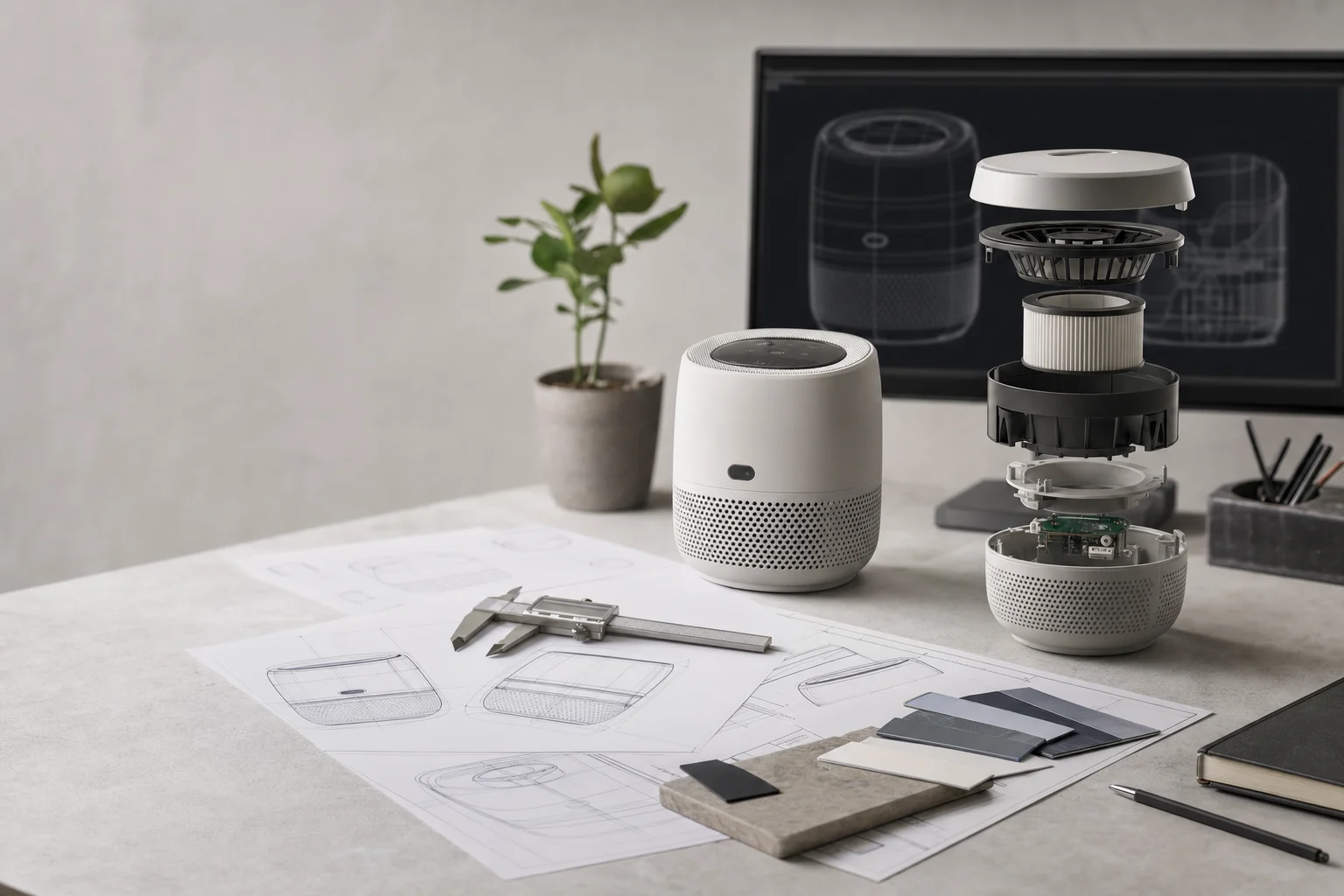
This article compares six agencies that cover design, engineering, prototype testing, and manufacturing readiness for consumer products. Klugonyx leads the list because it keeps all four disciplines under one roof with on-the-ground factory oversight, but every agency below has strengths worth understanding before you commit. If you want to see examples of connected design, engineering, and manufacturing work, browse the Klugonyx product portfolio.
Quick Guide: 6 Best Product Development Agencies for Startups
- Klugonyx: The best full-service partner for consumer brands that need integrated design, engineering, and factory-level production management across baby, toy, outdoor, home, wellness, and pet categories.
- Linton: A U.S.-based firm with a cost-reduction focus and a shared-success pricing model for brands already selling on Amazon or through retail.
- International Product Solutions (IPS): A 25-year-old agency offering concept-to-market support with offices in the U.S., Taiwan, and China.
- AJProTech: A hardware-focused studio with in-house rapid prototyping for IoT, consumer electronics, and connected devices.
- Gembah: A marketplace-style platform that connects founders with a network of designers and factories for consumer goods.
- Enventys Partners: A product launch agency combining industrial design, engineering, and crowdfunding marketing under one company.
How We Chose the Best Product Development Agencies for Startups
Finding an agency that can take a product from napkin sketch through prototype testing and into a production-ready state requires more than a portfolio review. We evaluated each firm against criteria that matter at the factory level, not just the design studio.
- Design-to-manufacturing integration: Does the agency's engineering team work alongside its designers from day one, or do they hand files off between departments? Early alignment cuts rework and shortens your path to a golden sample.
- Prototype testing rigor: Can the agency produce functional prototypes in production-grade materials, validate fit and function, and iterate before you commit to tooling?
- Factory sourcing depth: Does the agency maintain a vetted factory network across multiple regions (China, Vietnam, Mexico, India), or does it rely on a single country?
- On-site quality control: Does the agency station people at the factory during production, or does it manage quality remotely through email and photos?
- Manufacturing readiness support: Does the agency deliver factory-ready files (CAD, tech packs, BOMs, DFM notes) and manage sampling through to an approved golden sample?
- Consumer product category experience: Has the firm shipped products in categories like baby, toys, outdoor, home goods, wellness, apparel, or pet?
The 6 Best Product Development Agencies for Startups
1. Klugonyx: Best Overall Product Development Agency for Consumer Brands
Klugonyx connects product engineering, industrial design, and factory sourcing into a single workflow. Founded in 2013 in Salt Lake City, the firm has delivered more than 3,000 SKUs across baby, toy, outdoor, home, wellness, apparel, and pet categories for first-time founders and Fortune 500 brands alike.
What separates Klugonyx from agencies that stop at renderings is its factory sourcing and production management arm. The team maintains over 500 vetted factory connections across China, Vietnam, Mexico, and India. Engineers and sourcing agents collaborate from the design phase so every tolerance decision accounts for real factory capabilities.
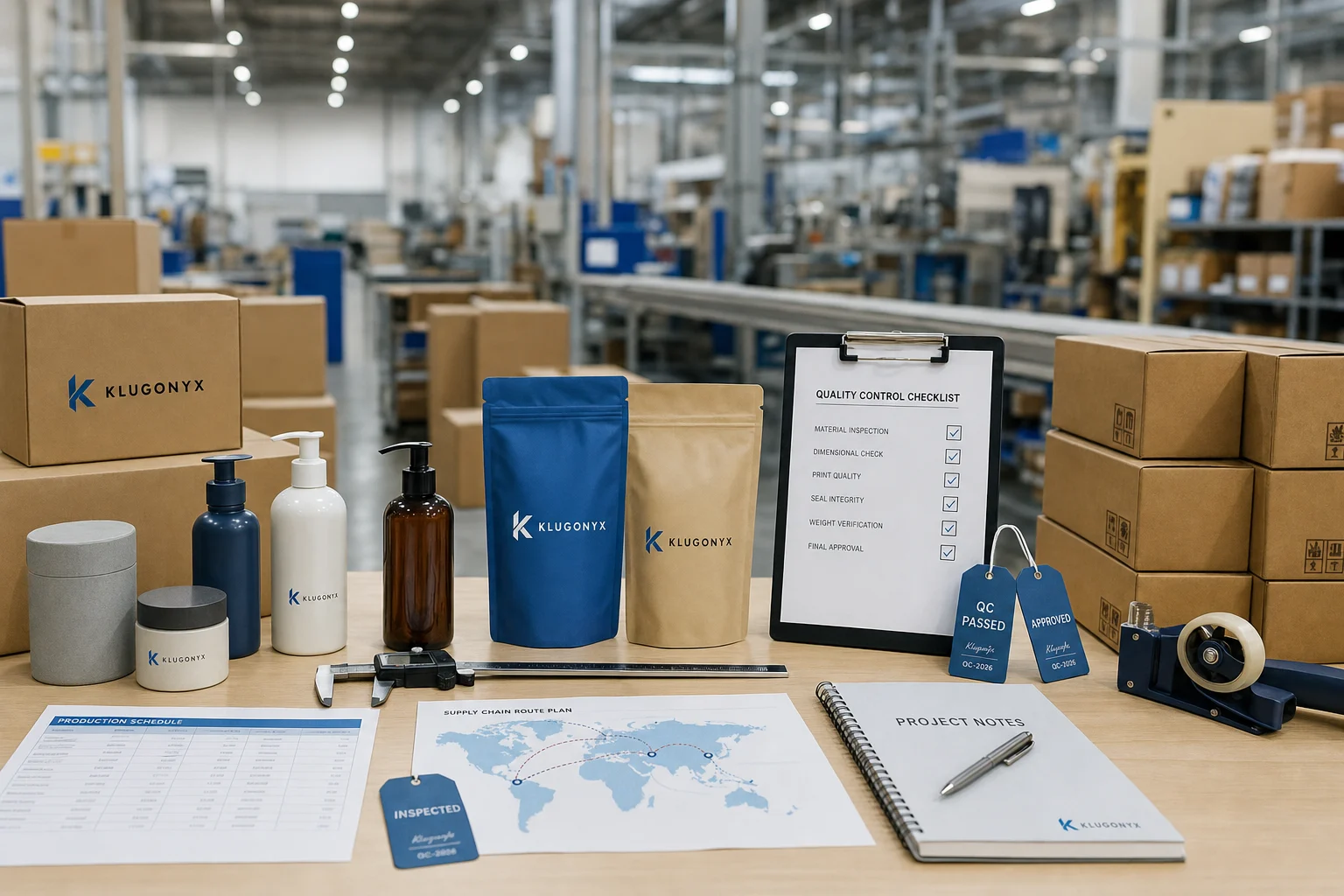
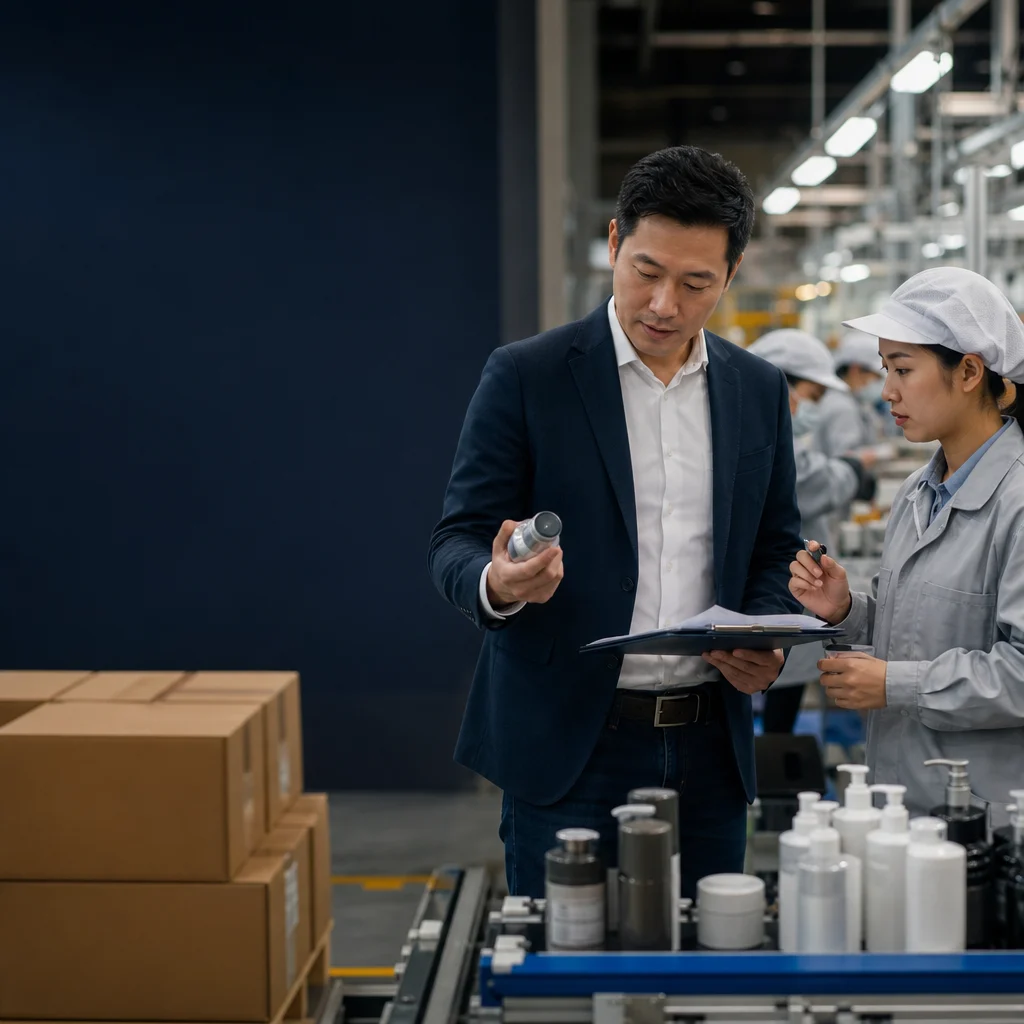
Klugonyx stations its own quality control specialists at partner factories during production. This on-the-ground presence keeps your defect rate at or below 2%. Clients like Busy Baby, Dorai, and Parkit have scaled from early prototypes to seven-figure product lines through this connected process.
Beth, the founder of Busy Baby, put it this way: "Klugonyx has held my hand through the entire process from initial design through manufacturing. They've supported me every step of the way to grow my product line and seven-figure business."
Klugonyx Features
- Integrated design and engineering: Designers and mechanical engineers collaborate from concept through tech pack creation, so your product is built for the factory from day one, not reverse-engineered after the fact.
- DFM-driven prototyping: Functional prototypes are created using production-grade materials and validated against DFM criteria before you invest in tooling.
- Global factory sourcing: The team sources and audits factories in person across multiple manufacturing regions, negotiates pricing, and locks in legally binding factory agreements that protect your IP and quality standards.
- On-site production management: Klugonyx places its own people at the factory during production to run in-line and pre-shipment inspections.
- Packaging and logistics coordination: From dieline creation through freight booking, tariff documentation, and customs clearance, Klugonyx manages the final mile from factory to warehouse.
- Work-for-hire IP ownership: You own all design files and assets produced during the engagement, giving you full control of your product data.
Klugonyx Pros and Cons
Pros:
- One accountable team from concept through production reduces handoff errors, shortens timelines, and keeps your landed costs predictable.
- On-the-ground quality control with direct factory issue resolution prevents the defect surprises that remote-only agencies miss.
- Deep consumer product category experience across baby, toy, outdoor, home, wellness, apparel, and pet means fewer learning-curve delays for your specific product type.
Cons:
- The firm focuses on consumer products, so brands developing industrial or B2B equipment may need a partner with different regulatory and testing expertise.
- Klugonyx's factory network is concentrated in Asia and Mexico; brands targeting domestic-only manufacturing in the U.S. or Europe may need to supplement sourcing.
- The engineering and prototyping phase typically runs 4 to 8 weeks before factory engagement begins, which may require planning for teams with compressed launch timelines.
2. Linton: Cost-Reduction Focus for Amazon and Retail Brands
Linton is a U.S.-based product development and manufacturing firm with four overseas offices across Asia. The company has completed more than 1,200 projects and reports an average savings of 22.6% on cost of goods sold for brands going through its manufacturing cost-reduction program. Its network includes over 700 vetted factories.
The firm uses a shared-success pricing model with low upfront fees, earning long-term profit when the client's product performs in market. Linton covers product design, engineering, factory sourcing, prototyping, QC, and logistics under one workflow.
Linton Features
- Manufacturing cost reduction: Linton benchmarks your current cost of goods against alternative factories to find savings without changing product specs.
- Golden Sample standard: The firm produces a finalized sample that becomes the production benchmark for all future QC inspections.
- In-house QC offices: Four overseas offices manage factory communication, monitor production, and conduct inspections on site.
Linton Pros and Cons
Pros:
- The cost-reduction program is structured around real factory benchmarking, not estimates.
- The shared-success fee model reduces upfront financial risk for early-stage brands.
- Category coverage spans 200+ product types including electronics, sporting goods, and pet products.
Cons:
- The company does not list a venture studio or co-creation model for brands that want equity-based partnerships.
- Factory network coverage is concentrated in Asia and Africa; Mexico and Latin America are not listed as sourcing regions.
- The shared-success model means Linton retains a margin on ongoing orders, which affects your unit economics over time.
3. International Product Solutions (IPS): 25 Years of Global Sourcing Experience
International Product Solutions operates from offices in the U.S., Taiwan, and China. The firm has supported brands for over 25 years across custom product design, engineering, prototyping, manufacturing, QC, and logistics. Its factory partnerships span categories including household goods, molded plastics, sporting goods, crowdfunded products, and e-commerce brands.
IPS runs its own in-line and pre-shipment quality inspection procedures and guarantees its parts and products. The company also offers distribution channel strategy consulting for e-commerce, retail, and direct-to-consumer brands.
IPS Features
- ConceptForge process: A proprietary 8-step development process that moves from concept through mass production.
- In-house QC team: IPS manages its own quality inspections during production, including in-line and pre-shipment checks.
- Distribution strategy: The firm consults on channel selection for e-commerce, brick-and-mortar, DTC, and distributor networks.
IPS Pros and Cons
Pros:
- 25+ years of operation and offices in three countries give the firm established factory relationships across Asia.
- The proprietary ConceptForge process structures development into clear, repeatable steps.
- Distribution consulting is included for brands that need help with channel strategy after manufacturing.
Cons:
- The firm does not list factory sourcing coverage outside of Asia (no Mexico, Vietnam, or India options are mentioned).
- The website does not describe a DFM-specific engineering service or formal design-for-manufacturing methodology.
- Case studies on the site focus primarily on promotional and crowdfunded products, with limited examples in categories like baby, outdoor, or wellness.
4. AJProTech: Hardware and IoT Product Engineering Studio
AJProTech is a hardware product development company headquartered in Los Angeles with R&D and manufacturing in Taiwan. The firm specializes in IoT, consumer electronics, and connected products. It has manufactured over 400,000 units across 55+ commercially launched projects.
AJProTech has earned multiple design awards, including Red Dot, iF Design Award, and Fast Company Innovation by Design. The company has 45 engineers across electrical, mechanical, firmware, and software disciplines.
AJProTech Features
- In-house rapid prototyping: The firm delivers fast, functional iterations for hardware validation with no minimum order quantity for low-to-medium volume production.
- Full-cycle electronics engineering: Services cover electrical engineering, firmware, semiconductor design, and mobile app development alongside mechanical engineering.
- AI and IoT integration: AJProTech builds products with on-device machine learning, computer vision, and sensor fusion.
AJProTech Pros and Cons
Pros:
- Deep expertise in electronics, IoT, and connected devices with an in-house team of 45 engineers.
- No minimum order quantity for low-volume production runs, which reduces risk for early market testing.
- Award-winning industrial design with Red Dot and iF Design Award recognition.
Cons:
- The firm's focus is hardware, electronics, and IoT; non-electronic consumer goods like textiles, silicone, or cut-and-sew products are not listed as specialties.
- Factory network is based primarily in Taiwan and the U.S.; the firm does not list direct China-based factory management or quality control offices.
- Software and firmware services are included in the engagement scope, which may add unnecessary cost for founders developing simple, non-connected products.
5. Gembah: Marketplace Platform Connecting Founders with Designers and Factories
Gembah operates as a product development and supply chain platform with employees in the U.S., UK, India, China, Vietnam, and Mexico. The firm connects founders with a network of 600+ designers and a set of vetted factories across multiple countries. Services span industrial design, factory-led engineering, manufacturing, and marketing validation.
Gembah's model includes a market validation service that tests consumer demand through digital ads and landing pages before you commit to production. Case studies include brands like The Ollie World, which achieved a 15% reduction in single-unit manufacturing cost and added dual sourcing for supply chain resilience.
Gembah Features
- Design-to-manufacture (D2M) model: Designers work directly with factories during development to reduce surprises at the manufacturing stage.
- Market validation service: Data-driven demand testing through digital ads helps you confirm consumer interest before committing to large production orders.
- Multi-region sourcing: Factory partners in India, China, Vietnam, and Mexico give you geographic flexibility for supply chain diversification.
Gembah Pros and Cons
Pros:
- The marketplace model connects you with category-specific designers across a range of product types.
- Market validation testing adds a demand-verification step before you invest in tooling and production.
- Regional teams in six countries offer local factory oversight in key manufacturing hubs.
Cons:
- The network model means your designer and factory may not be part of the same internal team, which can create coordination gaps during handoffs.
- Gembah does not list a mechanical engineering or DFM-specific service on its website; engineering appears to be handled by factory partners.
- The platform does not describe legally binding factory agreements or IP protection structures in its published process.
6. Enventys Partners: Product Launch Agency with Crowdfunding Expertise
Enventys Partners is a full-service product launch agency based in Charlotte, NC. The firm combines industrial design, engineering, prototyping, and manufacturing sourcing with crowdfunding marketing and e-commerce strategy. It has helped file more than 750 patents and raised over $300 million through crowdfunding campaigns.
The company's specialties include IoT, technical soft goods, medical devices, pet products, infant and toddler products, and sporting goods. In-house prototyping capabilities include 3D printing, laser cutting, and compression molding.
Enventys Partners Features
- Crowdfunding launch support: The firm has managed over 600 Kickstarter and Indiegogo campaigns, combining product development with campaign strategy and marketing.
- In-house prototyping lab: Rapid functional prototypes are built internally using 3D printing, laser cutting, lamination, and compression molding.
- Patent filing support: Enventys Partners has helped clients file 750+ patents, integrating IP protection into the development process.
Enventys Partners Pros and Cons
Pros:
- Crowdfunding expertise is built into the agency's core offering, which is useful for founders planning Kickstarter or Indiegogo launches.
- In-house prototyping reduces turnaround time and keeps early iterations under one roof.
- Patent filing integration means IP protection happens alongside development rather than as an afterthought.
Cons:
- The firm does not describe on-site factory quality control or boots-on-the-ground manufacturing oversight in published materials.
- Manufacturing sourcing is described as connecting brands with global partners; the level of ongoing production management is not detailed on the website.
- The crowdfunding focus may not align with brands that are past the launch stage and need volume production and supply chain scaling.
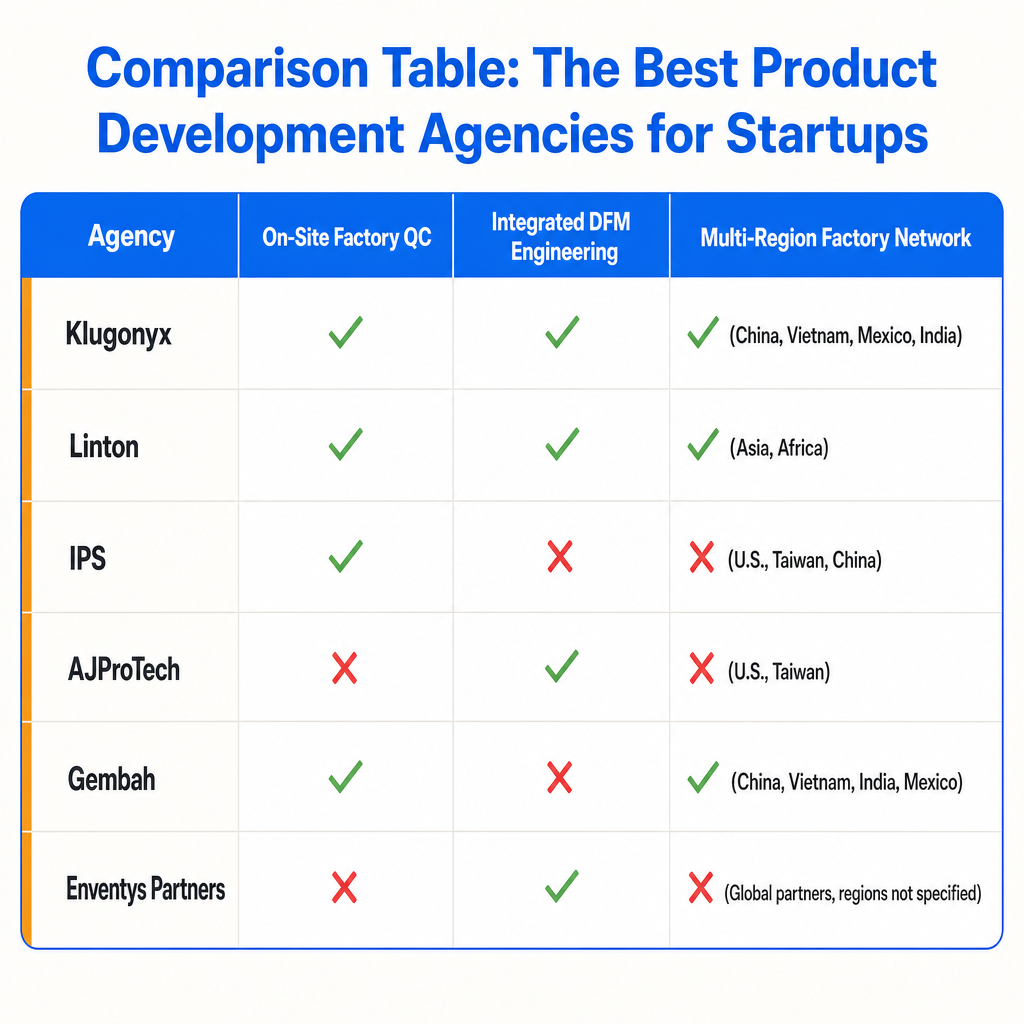
Comparison Table: The Best Product Development Agencies for Startups
What Should You Look For in a Product Development Agency Before Signing a Contract?
The most important question to ask any agency: who is accountable when something goes wrong at the factory? If the answer involves a different vendor or "the factory handles that," you are taking on risk that should belong to your development partner.
Ask to see the firm's factory agreement template. A credible agency will have legally binding contracts that lock in pricing, quality standards, timelines, and IP protections. Klugonyx requires factories to sign enforceable agreements covering all four areas, with tooling ownership terms that keep your molds under your control.
Request a DFM review as part of your evaluation. If the agency cannot walk you through how it catches manufacturing problems before molds are cut, its engineering process may not be deep enough to prevent expensive corrections during production.
How Do You Know If Your Product Is Truly Ready for Manufacturing?
Manufacturing readiness is not a single milestone. It is a checklist of conditions that need to be true before you request quotes or place a purchase order. Klugonyx publishes a factory sourcing checklist that helps founders see exactly where their gaps are before they engage a factory.
At a minimum, you need production-intent CAD files, a complete bill of materials, DFM notes reviewed by an engineer who knows your factory's capabilities, and a validated functional prototype. Without these, your factory quotes will be inaccurate and your timeline will slip.
A manufacturing readiness review before you spend on tooling is one of the most cost-effective steps in the process. Klugonyx conducts these reviews as a standard part of its engineering-to-factory handoff, catching production gaps before they become problems.
Why Klugonyx Is the Best Product Development Agency for Consumer Brands
Most agencies do one or two things well. A design firm produces concepts. A sourcing agent finds a factory. An engineering consultancy delivers CAD files. Every time a decision crosses from one vendor to the next, something gets lost or built to the wrong spec.
Klugonyx eliminates that pattern by keeping design, engineering, factory sourcing, quality control, and logistics under one team. That connected workflow is why Busy Baby scaled from a first prototype to a seven-figure product line, and why Dorai and Parkit trust the firm with their entire catalog.
Klugonyx gives you senior-level product development expertise, 500+ vetted factory connections, and on-the-ground production management at a fraction of hiring those roles in-house. Ready to move from concept to production-ready product? Reach out to the Klugonyx team to schedule a free planning session.
FAQs About Best End-to-End Product Development Agencies
What Is an End-to-End Product Development Agency?
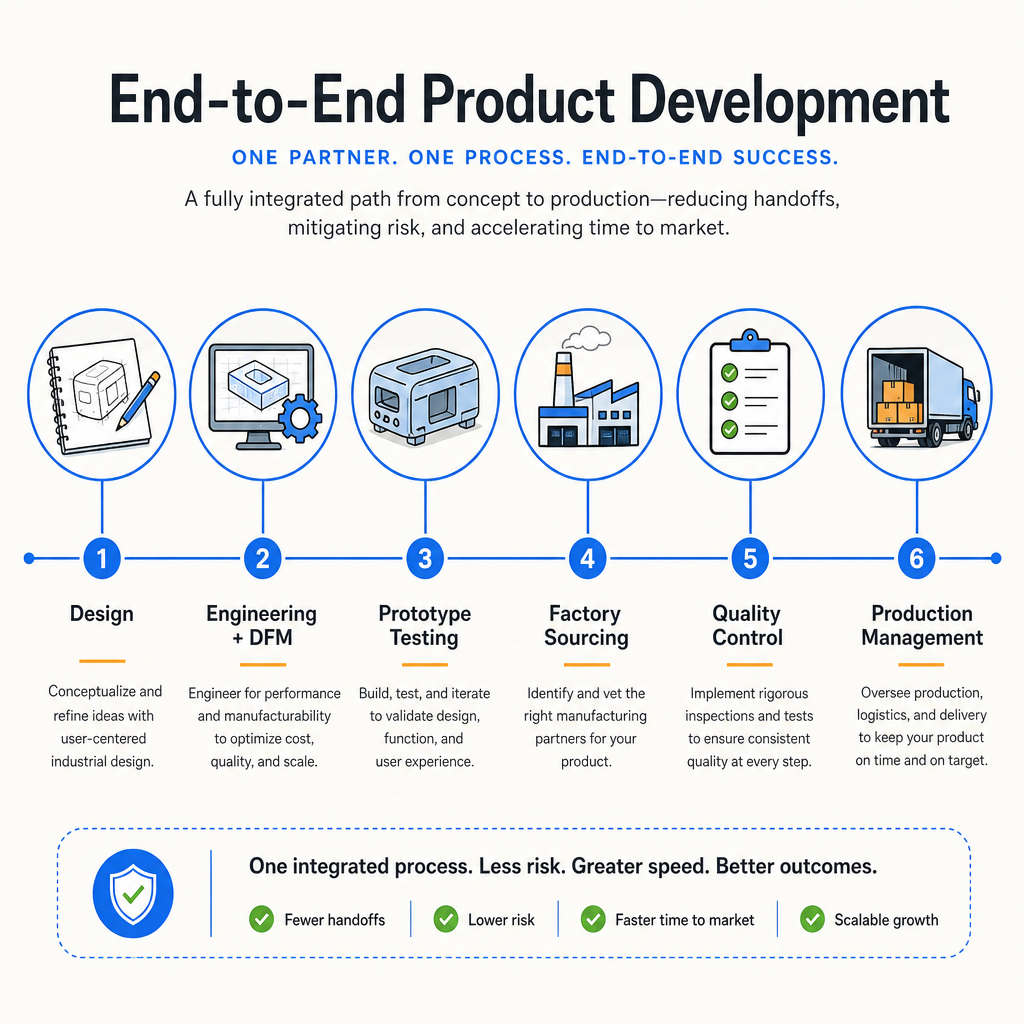
An end-to-end product development agency covers every step from concept and industrial design through engineering, prototyping, factory sourcing, production management, and logistics. Klugonyx handles all of these under one team, which means you avoid the handoff errors and timeline delays that come from stitching together separate vendors.
How Long Does It Take to Go from Prototype to Production-Ready Product?
Timelines vary by product complexity. A simple consumer product might move from engineering to approved golden sample in 3 to 4 months. Multi-part products with mechanisms or regulatory requirements can take 6 to 9 months. Klugonyx maps out a realistic schedule at project kickoff so you know every milestone.
What Is DFM and Why Does It Matter for Startups?
DFM, or design for manufacturing, is the process of optimizing your product design so it can be built efficiently at scale. It covers wall thickness, draft angles, assembly sequence, and tolerances. Klugonyx integrates DFM from day one, catching manufacturing problems before tooling.
How Do You Protect Your Intellectual Property When Working with an Overseas Factory?
Start with a legally binding NDA enforceable in the factory's country of origin. Klugonyx requires all partner factories to sign NDAs and factory agreements that protect pricing, timelines, quality standards, and IP. Work-for-hire terms ensure you own all design files and assets.
Can a Product Development Agency Help with Packaging and Logistics?
Yes. A full-service agency like Klugonyx manages packaging design, freight booking, tariff documentation, and customs clearance as part of its connected workflow. This takes you from approved production through final delivery to your warehouse without needing to coordinate a separate logistics vendor.