How to Find and Vet a Factory the Right Way (Without Alibaba)
Scrolling through Alibaba at midnight, copying supplier names into a spreadsheet, and crossing your fingers — that is how a lot of product launches begin. And honestly, that approach works out sometimes. But "sometimes" is not a strategy when your brand, your capital, and your timeline are on the line.
If you are serious about building a product that holds up to real-world use and real customer expectations, you need to know how to vet a factory before a single unit gets made. Not just whether they respond quickly on the chat widget, but whether their production floor, quality systems, and contract terms can actually support what you are trying to build.
This post walks you through what that vetting process really looks like. If you are earlier in the process and still figuring out how sourcing works at a foundational level, start with our Product Sourcing for Entrepreneurs guide first, then come back here.
Why Alibaba Listings Only Tell Part of the Story
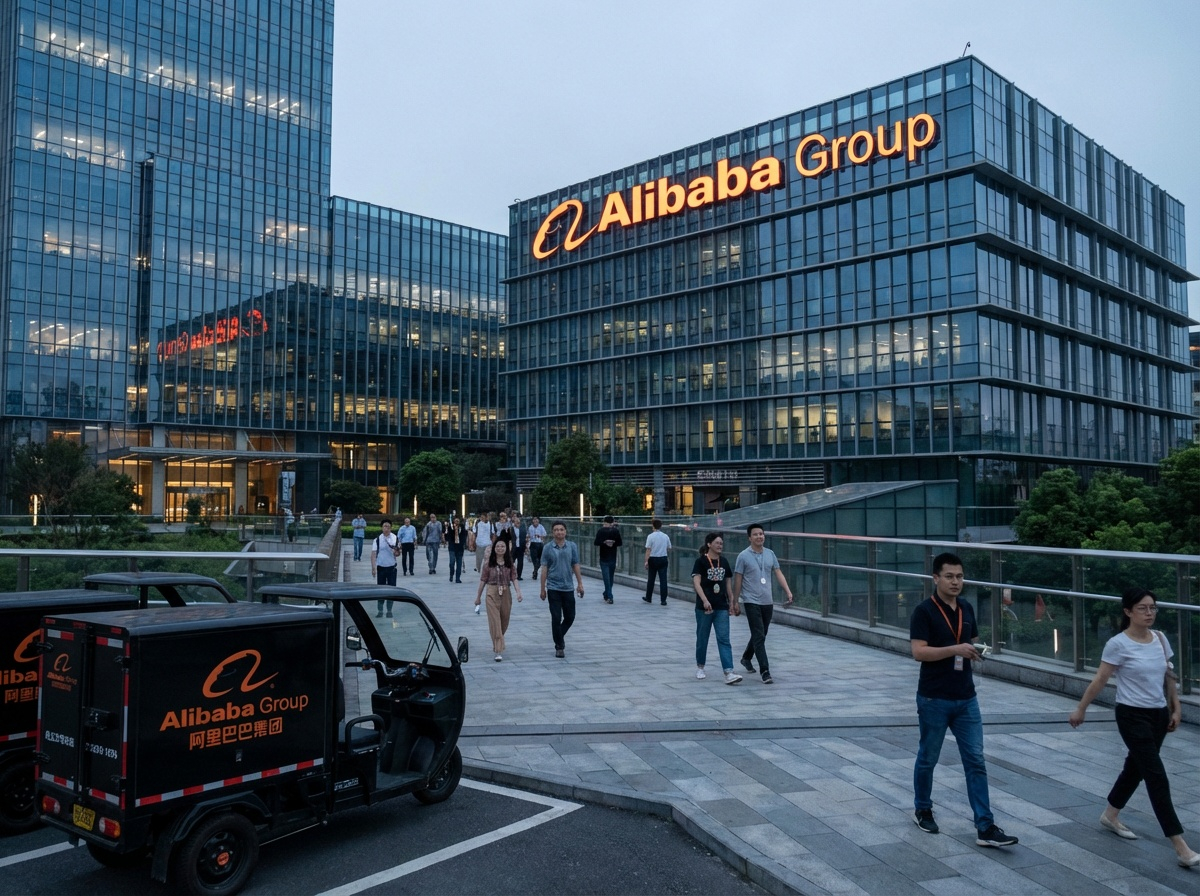
Alibaba is a directory, not a due diligence tool. A supplier can have a "Gold Supplier" badge, five-star reviews, and a polished product catalog while operating facilities that would not survive a basic audit. The platform does some verification, but it is largely transactional. It tells you a manufacturer exists. It does not tell you whether they can execute your product at your quality standard.
Additionally, many listings represent trading companies rather than actual factories. You may spend weeks negotiating with someone who is not the manufacturer at all, which means less visibility into the actual production process and more layers between you and your product.
The result is that a lot of entrepreneurs end up burned. Wrong materials. Wrong tolerances. Shipments that fail inspection. Delays with no accountability. These are not rare horror stories. They are common outcomes when sourcing is treated as a task rather than a discipline.
What Does Vetting a Factory Actually Involve?
Knowing how to vet a factory means going well beyond reviewing a profile page. A real vetting process has several distinct components.
Facility Verification
Before anything else, confirm the factory is what it claims to be. This means verifying their business license, their physical location, their production capacity, and their workforce size. A factory claiming to produce 50,000 units per month with 30 employees deserves a follow-up question.
Third-party verification services and on-site visits are the gold standard here. Remote verification has improved with video audits, but there is no substitute for eyes on the floor.
A Factory Audit
A factory audit is a structured, documented evaluation of a manufacturer's operations. A thorough audit covers several key areas:
- Quality management systems: Do they have documented QC processes? Are they ISO certified or working toward certification?
- Production capabilities: Do their machines, tooling, and workforce actually match your product requirements?
- Raw material sourcing: Where do they source materials, and do those suppliers have their own certifications?
- Social and ethical compliance: Are labor practices legal and ethical? This matters for your brand and increasingly for import regulations. Frameworks like SMETA (Sedex Members Ethical Trade Audit) have become an industry standard for evaluating this.
- Financial stability: A factory that cannot make payroll is a factory that will cut corners on your order.
Audits can be conducted by specialized third-party firms, by your own team, or by a manufacturing partner operating on your behalf. The most useful audits result in a written report with a clear risk assessment.
Sample and Capability Testing
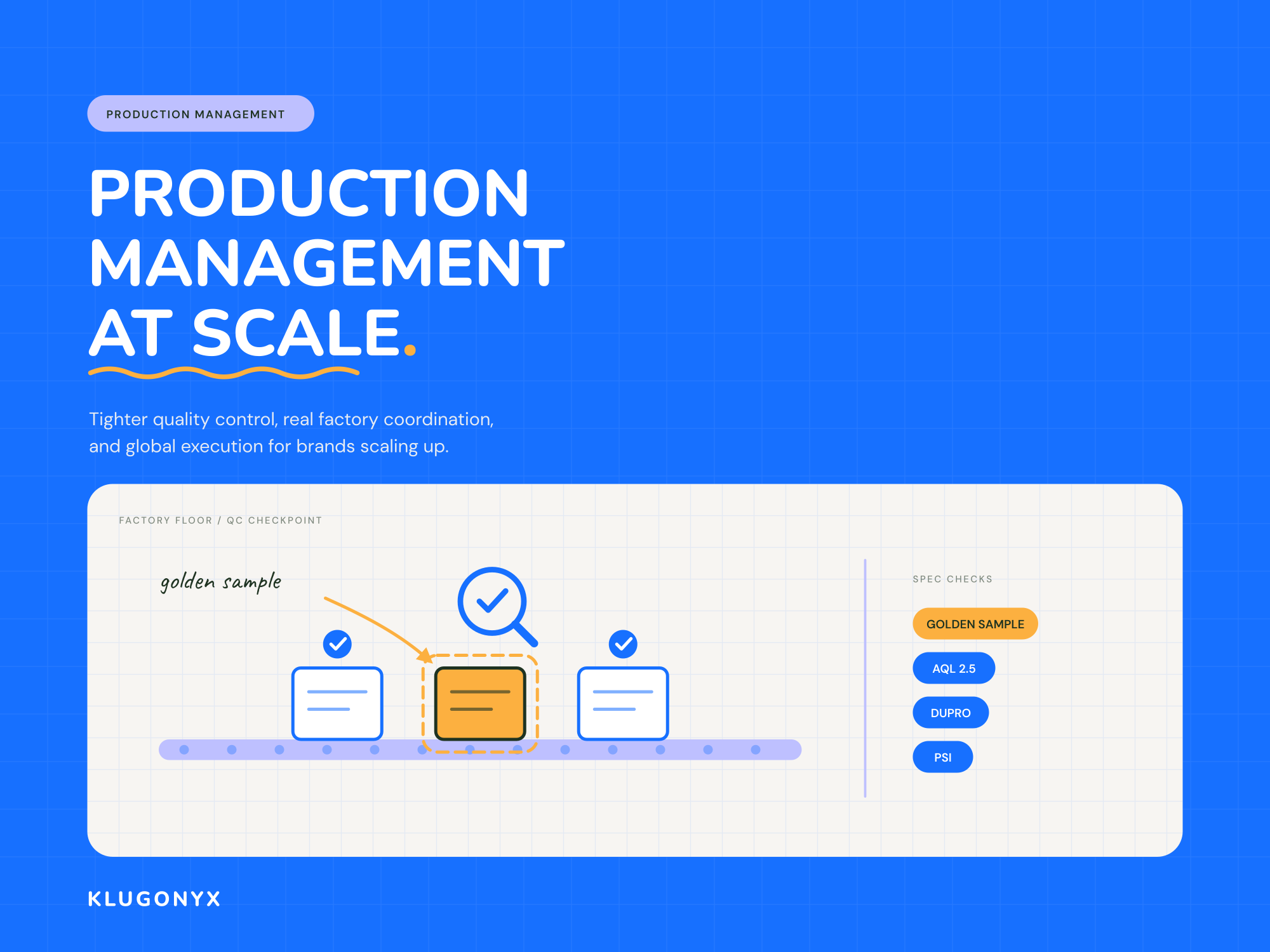
A factory may audit well on paper but struggle with your specific product. Therefore, request engineering samples or golden samples early in the relationship. Test them rigorously against your spec sheet. Evaluate not just whether the product looks right, but whether it performs to spec under real-use conditions.
This is also when you pressure-test communication. How quickly do they respond to feedback? How do they handle revisions? Their behavior on samples is a preview of their behavior on your full production run.
What Needs to Be in a Factory Agreement?
Knowing how to vet a factory gets you to the right partner. A binding agreement is what protects you once the relationship begins. Many entrepreneurs skip this or accept a supplier's standard template, which is almost always written in the supplier's favor.
A solid factory agreement should cover:
- Intellectual property ownership: Your designs, molds, and tooling belong to you. This needs to be explicit, especially when molds are manufactured abroad.
- Product specifications: Attach a detailed spec sheet and make it part of the contract. Vague agreements produce vague products.
- Quality acceptance criteria: Define what acceptable quality looks like, including AQL (Acceptable Quality Level) sampling standards and what happens when a shipment fails.
- Production timeline and penalties: Include milestone deadlines and consequences for missing them. Without this, delays are unlimited and costless for the factory.
- Payment terms: Never pay 100% upfront. A standard structure is 30% deposit with 70% paid upon inspection and before shipment.
- Dispute resolution: Specify jurisdiction and method. Arbitration clauses with a neutral jurisdiction can save significant costs if things go wrong.
Getting local legal review, particularly from someone familiar with the manufacturing country's contract law, is worth the investment.
What On-Site QC Catches That Remote Teams Miss
Remote quality control has improved significantly. Video inspections, real-time monitoring tools, and factory-embedded QC staff are all real options now. However, on-site quality control still catches things that remote oversight misses.
Production floor conditions change daily. A factory that passes a video inspection on Monday may be running with different materials, a subcontracted workforce, or changed machinery by Wednesday. On-site inspectors observe the full context: how materials are stored, how workers are briefed, whether the production batch matches the approved sample, and whether the packaging is being executed correctly.
Moreover, experienced on-site inspectors know what to look for that a camera angle will never capture: smell, texture, the sound of a weld, the flex of a component under hand pressure. These sensory data points matter for a lot of product categories.
For high-stakes production runs, on-site pre-shipment inspection is not optional. It is how you catch defects before they are sealed in a container and shipped across an ocean.
How to Build a Sourcing Relationship That Scales
A factory is not just a vendor. The best manufacturing partnerships function more like an extension of your team. That requires consistent communication, fair treatment, and a clear expectation of mutual investment.
Factories prioritize orders from clients who are reliable, respectful, and predictable. If you want to be first in line during a capacity crunch, be the kind of client factories want to work with. Pay on time. Give clear feedback. Treat revision cycles as collaborative, not combative.
As your volume grows, your leverage grows too. However, that leverage is most valuable when the relationship is already strong. Start building that trust from the first conversation.
FAQ: Product Sourcing and Factory Vetting
What should I look for when vetting an overseas factory?
Start with verification basics: confirm their business license, physical location, and production capacity. From there, look for documented quality management systems, appropriate certifications (ISO 9001 is a strong baseline), consistent communication responsiveness, and a willingness to provide references from existing clients. Request samples early and evaluate both the product quality and their revision process. A factory that handles feedback professionally on a sample will handle it professionally at scale.
What does a factory audit actually involve?
A factory audit is a structured evaluation of a manufacturer's operations across four main areas: quality systems, production capabilities, social and ethical compliance, and financial stability. Auditors review documentation, inspect the production floor, interview staff, and test processes against your specific requirements. The output is typically a written report with a risk rating. Audits can be conducted by independent third-party firms, by in-person visits from your team, or by a manufacturing partner with embedded oversight capabilities. For most entrepreneurs, a professional third-party audit on a shortlisted factory is the most practical and reliable approach.
What needs to be in a factory agreement to protect me?
Your factory agreement should include explicit IP and tooling ownership clauses, a detailed product specification attached as an exhibit, defined AQL quality standards with rejection and remedy procedures, production milestone dates with penalty terms for delays, a staged payment structure (typically 30% deposit and 70% on inspection), and a clear dispute resolution clause specifying jurisdiction and process. Avoid accepting a factory's standard template without review. Have the agreement reviewed by a legal professional familiar with the relevant manufacturing jurisdiction before signing.
How does Klugonyx vet its factory partners?
Klugonyx has developed a curated network of vetted manufacturing partners through years of hands-on product launches across categories. Every factory in our network has gone through a rigorous evaluation that includes facility verification, production capability assessment, quality system review, and sample validation against actual client projects. We do not source from directories. We build relationships based on demonstrated performance, and we maintain those relationships through consistent communication, on-site quality oversight, and ongoing performance tracking. When a Klugonyx client moves into manufacturing, they are not starting from zero. They are plugging into a network that has already been stress-tested.
Can I work with Klugonyx's factories directly once I've been introduced?
Our manufacturing relationships are built around Klugonyx-managed projects, and our factory partners work within that structure. Direct introductions outside of a managed engagement are not something we offer, because the value of the network comes from the oversight, accountability, and quality standards we maintain on your behalf. Think of it less like a rolodex and more like a system: the factories perform the way they do because of the structures we have put in place around every engagement. If you are looking for a long-term manufacturing partner that keeps those standards in place, we are built for exactly that. Get in touch here.
Ready to stop guessing and start building? Klugonyx partners with entrepreneurs and product teams to navigate sourcing, manufacturing, and QC from the ground up. Learn how our product sourcing works.