The Real Role of a Product Development Company (And Why It Might Not Be What You Think)
If you search "product development company," most results describe massive firms with enterprise-level retainers, 50-person teams, and six-figure minimums. That framing leaves out a huge share of the market: startups, small brands, and founders who need serious expertise without building an entire department from scratch.
So let's clear the air. Here's what a product development company actually does, what it doesn't do, and why the right partner can save you far more money than you might think.
What Is a Product Development Company?
A product development company takes your idea and turns it into a manufacturable, market-ready product. Depending on the firm, that can mean anything from sketching early concepts all the way through factory production and final delivery.
While some product development firms focus on one or two areas, full-service companies can support you from idea through commercialization, staying invested in your product's success from day one.
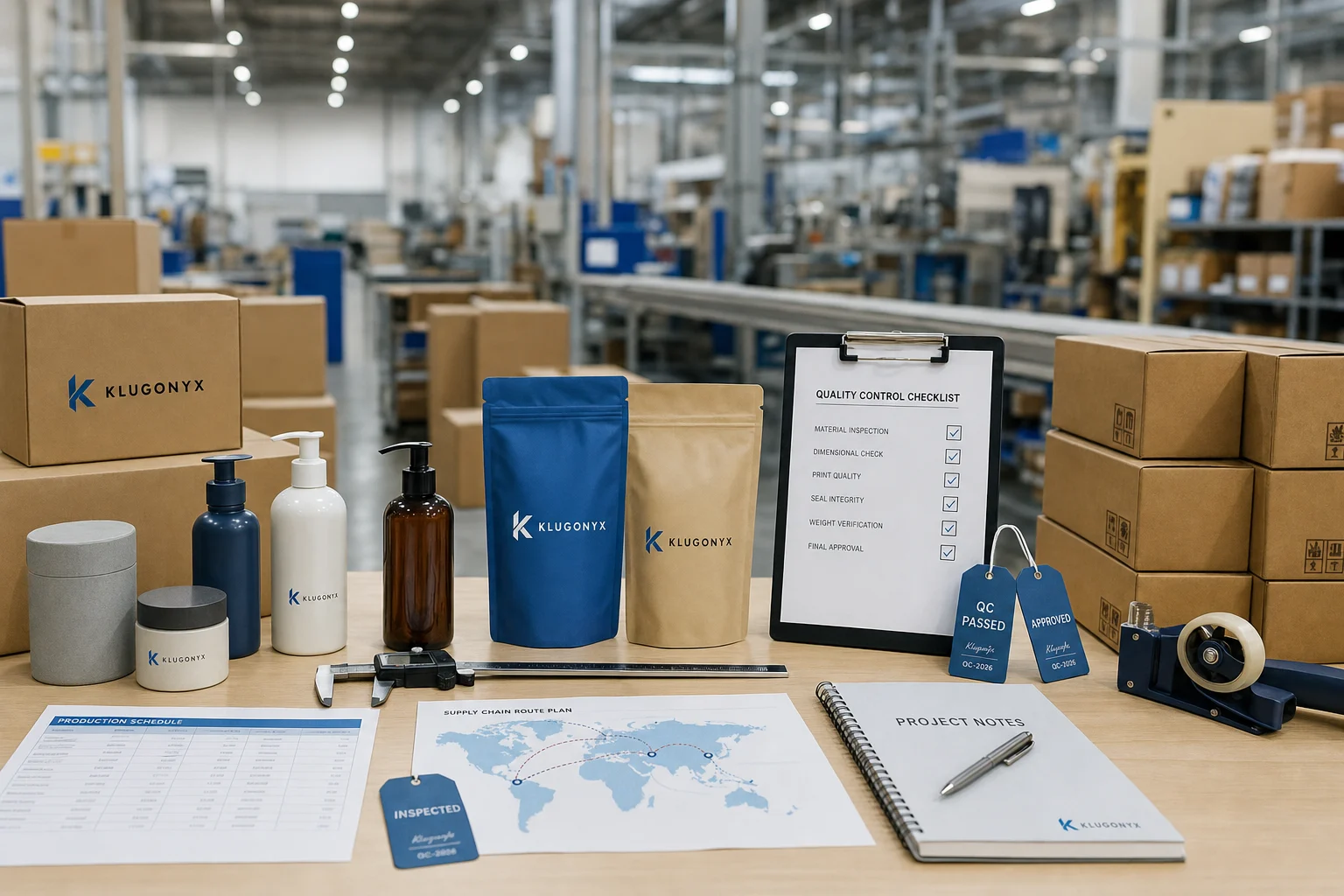
At Klugonyx, that means design, engineering, branding, packaging, factory sourcing, quality assurance, and logistics. One team, one workflow.
The Biggest Misconceptions About Product Development Companies
Misconception 1: "They just make it look pretty."
This is probably the most common misunderstanding. People hear "product design" and assume the work stops at renderings or mood boards.
It doesn't. Good product development runs design and engineering in parallel from day one. At Klugonyx, designers and engineers work together throughout the process, not in sequence. That means manufacturing cost and feasibility inform every design decision early, before expensive corrections become necessary. Skipping that overlap is one of the fastest ways to blow your budget mid-project.
The design process moves through three stages: ideation and exploration, concept refinement, and concept finalization. Each phase includes engineering and manufacturing check-ins so nothing gets handed off cold.
Misconception 2: "It's only for big companies."
Enterprise brands get most of the attention in search results, but the majority of product development work happens at the startup and small brand level. Founders launching their first physical product, DTC brands adding a second SKU, and mid-size companies entering new categories are exactly the clients that benefit most from a trusted outside team.
You don't need a 200-person company. You need the right eight people who have done it before in your category.
Misconception 3: "I can just piece it together myself."
You can hire a freelance industrial designer on one platform, find an engineer on another, and search Alibaba for a factory. Many founders try this. Most of them hit the same wall: misaligned files, factory rejections, costly redesigns, and launch delays that compound into real revenue loss.
The reason it breaks down is handoffs. Every time a file or decision crosses from one siloed vendor to the next, something gets lost, misunderstood, or re-interpreted. A unified team eliminates that friction by design.
Misconception 4: "A product development partner will take over my vision."
This one is more fear than fact. Customer pain points and the problem you're solving should remain the North Star throughout development. A good product partner treats your vision as the brief, not something to override. Their job is to push your idea toward something buildable, testable, and commercially viable, without stripping out what made it worth building.
What a Full-Service Product Development Partner Actually Covers
Here's a realistic breakdown of what you should expect from a capable, end-to-end partner:
- Design: Industrial design, concept sketching, CMF (color, material, finish) studies, dimensioning, and prototyping-ready deliverables
- Engineering: 3D CAD modeling, design for manufacturability (DFM), bill of materials (BOM), tolerance review, and physical prototyping
- Branding and Packaging: Logo development, brand guidelines, packaging dielines, and retail-ready graphics
- Manufacturing: Factory sourcing and vetting from a network of trusted suppliers, factory agreements, sample management, quality control, and production management with boots-on-the-ground oversight
- Logistics: Freight booking, customs documentation, and final product delivery coordination
The Real Math: What It Actually Costs to Build This Team In-House
Here is where the conversation gets concrete.
Building an equivalent internal team at a growing brand would require at minimum: a senior product designer, a mechanical engineer, a graphic designer, a production manager, a quality specialist, a logistics coordinator, and some form of sourcing leadership. That's before you add a dedicated account or project manager.
A mid-level product designer in the US earns around $95,770 per year in total compensation. A product design engineer in the US earns a median salary in the range of $76,000 to $87,000 depending on location. A VP-level global sourcing leader runs considerably higher, often $150,000 or more in total compensation.
Beyond salaries, additional costs including benefits, recruiting, and onboarding typically add another 20% to 30% to each full-time hire.
Add it up across eight or nine roles and you're looking at $500,000 or more per year in fully-loaded personnel costs, and that's before you've ordered a single component or paid for a prototype.
Partnering with Klugonyx gives you access to that entire team, with cross-industry experience and a vetted factory network, at a fraction of that cost. You get the expertise on demand, without the overhead, the HR management, or the long hiring cycles.
Why the "Integrated" Part Matters More Than You Think
A lot of vendors claim to be end-to-end. Fewer actually operate that way inside a single workflow.
When design, engineering, and manufacturing operate as one team rather than sequential hand-offs, the benefits compound. Design decisions account for manufacturing cost from the start. Engineers flag feasibility issues before files go to the factory. Sampling feedback loops back directly into CAD refinement. The result: fewer rounds of expensive corrections, faster time to a golden sample, and products that actually hit their target margin.
It's far better to think about a product at a higher brand level and design a holistic plan, rather than pursuing a single idea in isolation. That's exactly the kind of strategic thinking an integrated partner brings to early-stage projects.
Brands like West Elm, Williams-Sonoma, Liquid Death, and Dorai have trusted products that moved through this kind of rigorous, collaborative process. The same pipeline available to them is available to a brand placing its first purchase order.
Who Actually Needs a Product Development Partner?
If any of these describe you, the answer is probably yes:
- You have a product idea but no engineering background
- You've tried to source manufacturing independently and hit dead ends
- You're a DTC brand adding a new product and need it designed and produced correctly
- You're scaling a product line and need consistent quality across multiple SKUs
- You want experienced eyes on your design before you spend money on tooling
The entry point is simpler than most people assume. You don't need a finished design or a finalized concept. A conversation about where you're starting is enough to map out what you need.
If you'd like to get in touch with Klugonyx about developing a product, then reach out to us here!
Frequently Asked Questions
What is a product development company and what do they do?
A product development company helps you take a product idea from concept to manufacturable reality. Services typically include industrial design, mechanical engineering, prototyping, factory sourcing, quality assurance, and logistics. Full-service firms like Klugonyx cover the entire process under one team, which reduces hand-off errors, shortens timelines, and produces more cost-effective outcomes than assembling a patchwork of independent vendors.
Is a product development company only for large businesses?
No. While enterprise brands use product development firms, startups, DTC brands, and first-time founders are some of the most common clients. A full-service partner is especially valuable for smaller teams that can't justify building out an internal product, engineering, and sourcing department. The economics work in your favor: you get senior-level expertise across multiple disciplines for a fraction of what those roles would cost as full-time hires.
What is the difference between a product design firm and a full-service product development company?
A product design firm typically focuses on the visual and conceptual phase: sketches, renderings, and CMF exploration. A full-service product development company continues past design into engineering, prototyping, factory sourcing, production management, and logistics. The distinction matters because design-only firms hand off to other vendors at the engineering stage, which can introduce gaps, delays, and cost overruns. A company like Klugonyx handles the entire process in one connected workflow, which keeps decisions aligned and quality consistent from concept through delivery.