100+ SKUs, One Overseas Partner: How to Make It Work
Managing a large product catalog with overseas manufacturing is one of the most operationally demanding things a growing brand can take on. Done well, it unlocks scale, margin, and reach. Done poorly, it becomes a full-time job of chasing factories, resolving quality issues, and untangling logistics problems that pile up faster than you can solve them.
This guide covers what it actually takes to manage 100 or more SKUs with an overseas partner, where most brands hit the wall, and how to build a system that scales without falling apart.
What Changes When Your SKU Count Crosses 100
A single product has one set of specs, one factory relationship, one sampling cycle, and one production timeline to track. Multiply that by 100 and every layer of complexity compounds.
A high SKU count typically means more materials to manage, more purchase activity, more chances for confusion, and shorter production runs that create more changeovers and disruptions on the shop floor. Each of those variables represents a decision point where something can go wrong.
The challenge isn't just volume. It's coordination. Design files need to stay current across every SKU. Factory agreements need to reflect each product's specs. Quality standards need to travel consistently from one production run to the next, even when factories or production lines change.
If you're spending 10 to 15 hours per week managing factory communication, chasing updates, coordinating inspections, and troubleshooting production issues, you're doing the work of a buying office without the local presence to do it effectively.
That's the moment most brands realize they've outgrown their current system.
Build Your Foundation Before You Scale
The brands that manage large catalogs well didn't figure it out at 100 SKUs. They built the right infrastructure early, then scaled it. Here's what that looks like in practice.
Get Your Files in Order
Every SKU needs a complete, current, factory-ready file package. That means 3D CAD models, technical drawings, a bill of materials (BOM), a color/material/finish (CMF) specification, and an approved golden sample. Maintaining two copies of your approved sample documentation, one at your office and one at the factory, ensures everyone references the same product specifications. Implement version control to track any revisions.
Without this discipline, factories default to memory and prior production. Small inconsistencies accumulate across SKUs and shipments until quality drift becomes a real problem.
Establish Quality Standards Before Production Starts
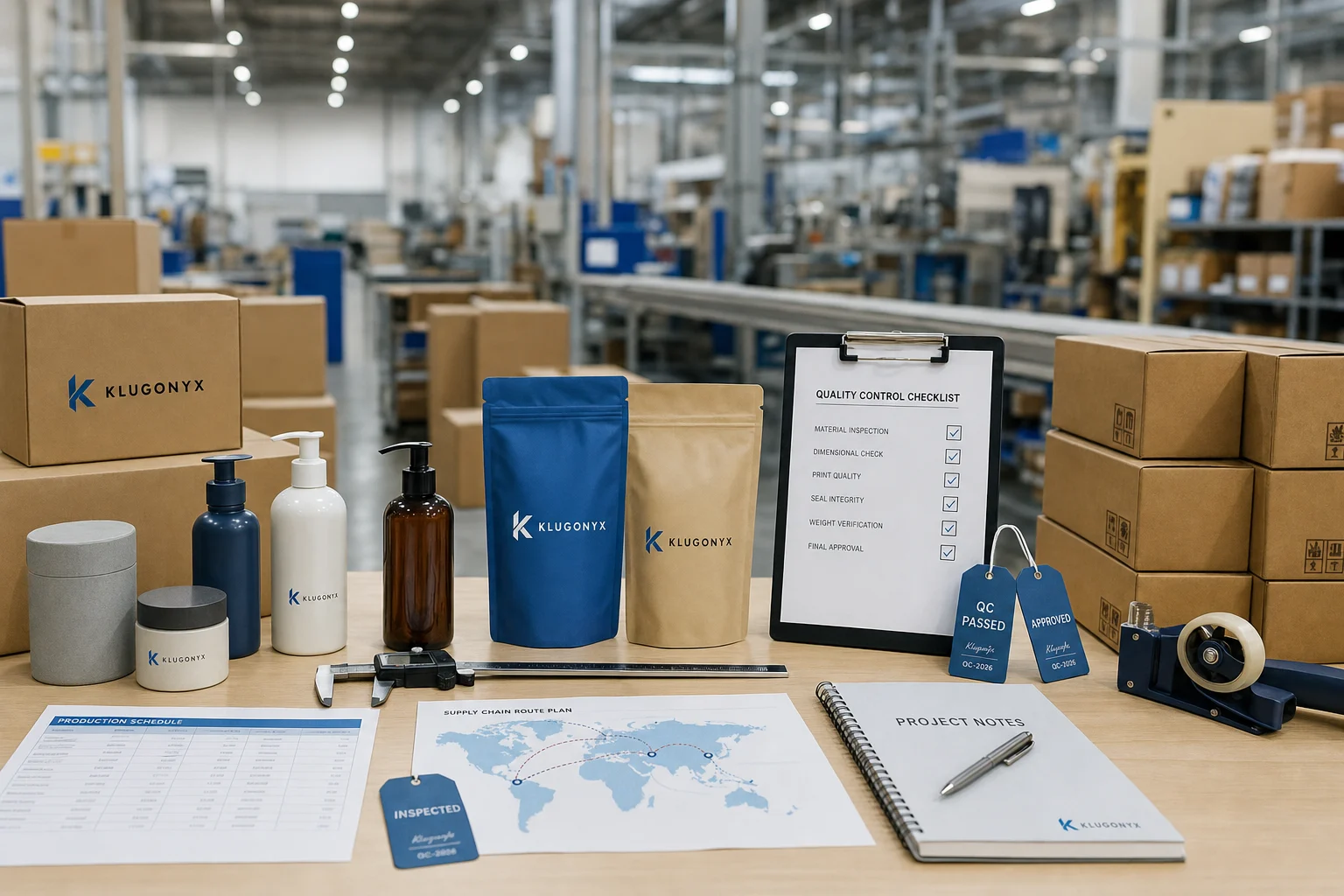
The single most effective thing you can do for quality control is share your standards in writing before production starts, not after you receive a defective shipment. A clear quality requirements document, sometimes called a QC checklist, gives your factory a defined benchmark and gives your team a consistent tool for evaluating every production run.
Inspection procedures should be developed collaboratively between the product engineer, the factory, and the client, with both the manufacturing partner and the factory signing off on the final quality plan. That shared ownership matters. It creates accountability on both sides.
Consolidate Factories Where Possible
Managing 100 SKUs across 20 factories is exponentially harder than managing them across five. Each factory relationship requires its own communication cadence, agreements, and QC oversight. Where your product mix allows it, consolidating production with fewer, deeper factory partnerships reduces management load and often improves pricing through higher volume leverage.
That said, concentration creates risk. A single-factory dependency for a high-volume SKU leaves you exposed to capacity issues, factory closures, and quality problems with no fallback. A smart partner helps you find the right balance between consolidation and redundancy.
The Role of Boots-on-the-Ground Oversight
Distance is the defining challenge of overseas manufacturing. Without being there, building relationships is more challenging, especially in countries that highly value face-to-face interactions. One of the best ways to overcome this is to partner with a team that can assign a local representative to your account, serving as your eyes and ears at the factory.
Regular product inspections both during production and before final shipment are vital for catching and correcting quality issues early. Inspections should be conducted consistently using clearly defined criteria, and results should be reviewed collaboratively with the factory's QC team to address problems promptly.
This is exactly where an integrated product development and manufacturing partner earns its value. Klugonyx maintains a team on the ground in Asia that visits factories, manages production timelines, resolves issues in real time, and verifies quality before goods ship. That presence is what keeps a 100-SKU catalog from becoming a 100-problem catalog.
How to Prioritize Across a Large Catalog
Not all SKUs deserve equal attention. Some drive the majority of your revenue. Some are in active growth. Others sit at the tail of your catalog and generate more complexity than margin.
The 80/20 principle applies directly to SKU management: identifying your highest-value SKUs and eliminating underperformers can cut costs, simplify logistics, and strengthen overall business performance.
A practical approach is to segment your catalog into three tiers:
- Tier 1 (Core SKUs): Your highest-volume, highest-margin products. These deserve the tightest QC standards, the deepest factory relationships, and dedicated production scheduling
- Tier 2 (Growth SKUs): Products with active market momentum. These need careful capacity planning to avoid stockouts as they scale
- Tier 3 (Tail SKUs): Low-volume products that may serve niche segments or retail requirements. Evaluate these regularly. Wider assortments are not safety nets. They just provide bigger holes for market opportunities, margins, and customer satisfaction to fall through
This tiering framework helps you allocate oversight resources where they create the most value, rather than spreading your team thin across every SKU equally.
Communication Rhythms That Actually Work
One of the most underrated variables in multi-SKU overseas management is communication cadence. Ad hoc check-ins create gaps. Structured rhythms create predictability.
A few practices that hold up at scale:
- Weekly production status updates for all active SKUs, organized by factory. These don't need to be long. They need to be consistent and standardized so issues surface before they become shipment problems
- Milestone-based alerts tied to key production phases: material procurement confirmed, production started, inline QC completed, pre-shipment inspection passed, freight booked. Each milestone is a checkpoint where problems can be caught and corrected
- A single point of contact at the factory for each product family. Routing all communication through one relationship reduces miscommunication and builds the kind of trust that pays off when you need a factory to prioritize your order or resolve an issue quickly
Establishing quality standards clearly and effectively from the beginning, then maintaining them throughout the production lifecycle, is essential. Those who don't may notice quality gradually slipping over a period of time or several shipments.
When to Consider a Dedicated Partner vs. Managing It Yourself
There's a version of this that works in-house. If you have an experienced sourcing team, an established factory network, strong file management discipline, and local presence in your manufacturing region, you can manage a large catalog without an outside partner.
Most growing brands don't have all of that. They have a scrappy team, a few key factory contacts, and a growing list of SKUs that's outpacing their operational capacity.
Companies that proactively vet manufacturing partners with data-driven methods are up to 40% more likely to maintain stable output and healthy margins during global disruptions. The right partner brings not just factory access, but process maturity that takes years to build internally.
Klugonyx supports brands from their first purchase order all the way through managing a 100-SKU portfolio. The same team that designed your product manages its production. That continuity means fewer things lost in translation and faster resolution when something goes wrong.
Please feel free to reach out if you'd like to learn more about our process.
Frequently Asked Questions
How do you manage multiple SKUs with an overseas manufacturer?
Managing multiple SKUs with an overseas manufacturer requires complete, version-controlled file packages for every product, clearly documented quality standards agreed on before production starts, structured communication rhythms, and ideally a local representative who can visit factories and oversee production in person. As catalog size grows, consolidating production across fewer factory relationships and tiering SKUs by volume and margin helps allocate oversight where it matters most.
How many factories should I use for a 100-SKU product catalog?
There's no universal answer, but the goal is to balance consolidation with redundancy. Spreading too thin across many factories creates management complexity and inconsistent quality. Concentrating too heavily in one factory creates supply risk. Most brands at 100 SKUs benefit from a small number of deep, well-managed factory relationships, typically three to eight depending on product categories, with backup sourcing options identified for highest-volume lines.
What is the biggest risk of managing a large SKU catalog overseas without a local partner?
The biggest risk is quality drift over time. Without regular on-the-ground oversight, factories gradually revert to easier or cheaper production methods, and issues surface only after a shipment lands. A local representative, whether in-house or through a partner like Klugonyx, provides the visibility needed to catch problems early and maintain standards consistently across every SKU and every production run.